

IFPTI provides expertise to help government regulatory agencies and organizations around the globe build a professional workforce.

FSPCA Virtual Instructor-Led
Preventive Controls for Human Food V2.0 Course & Food Traceability Rule



New Learning Resources Now Available
Do you have learning resources that you would like to share with the community?
Please contact us for more information on how to add your resources to the library.

Food Handler Programs
Retail
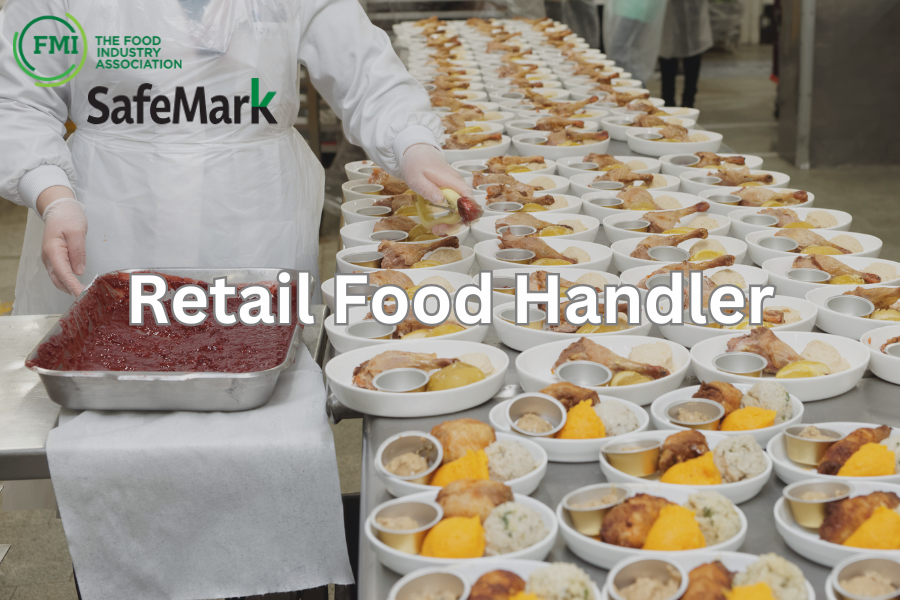
Food Service
Sanitation Control
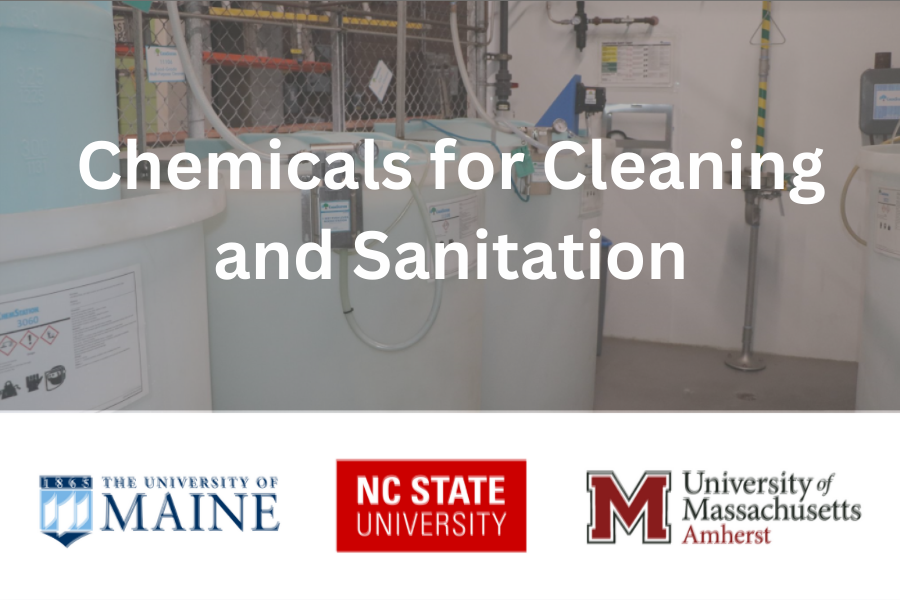
This module guides students in selecting the right chemicals for cleaning and sanitizing both food and non-food contact surfaces. Participants will learn to identify different types of soil or debris, understand secure and safe storage practices for chemicals, and recognize who is authorized to handle specific chemicals.
Learning Objectives: Chemicals for Cleaning and Sanitation
Select appropriate cleaning and sanitation chemicals for food and non-food contact surfaces
Identify types of soil or debris on surfaces
Describe secure and safe storage of cleaning and sanitation chemicals
Identify who is allowed to handle certain chemicals
Course length: This course is self-paced and will take approximately 14 minutes.
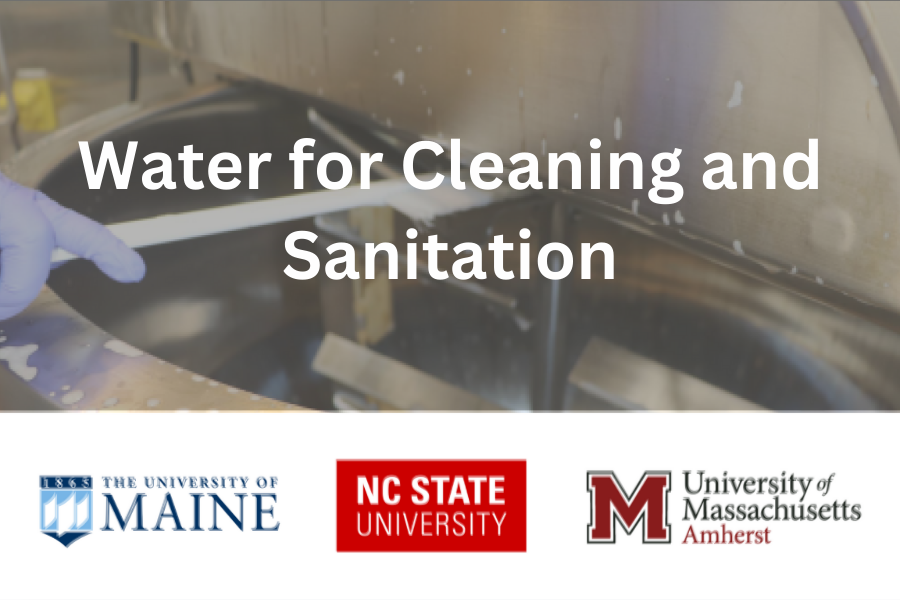
This module discusses the critical role of water in food processing sanitation. Participants will learn to identify regulatory standards for water quality and understand the procedures for testing water to ensure its suitability for use in food processing environments.
Learning Objectives: Water for Cleaning and Sanitation: Students will be able to:
Identify regulatory standards for water used in food processing
Identify how and when to test water for its suitability for use in food processing
Course length: This course is self-paced and will take approximately 45 minutes.
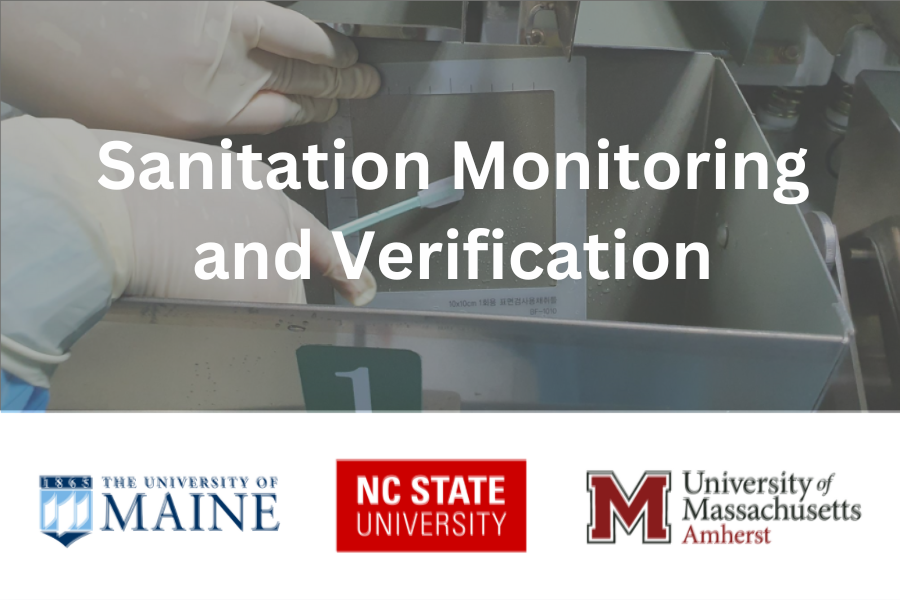
This module provides comprehensive training on monitoring and verifying sanitation practices. Students will learn best practices for cleaning and sanitizing monitoring activities, understand what needs to be documented, and select appropriate environmental monitoring methods. The module also covers determining corrective actions based on test results, defining verification, and reviewing documentation to ensure the sanitation program is implemented as designed.
Learning Objectives: Sanitation Monitoring and Verification: Students will be able to:
Identify best practices for cleaning and sanitizing monitoring activities
Identify what is to be written or entered and kept in sanitation records
Identify which environmental monitoring method to use in a given scenario
Determine corrective actions when given test results of general sanitation monitoring
Define verification
Identify best practices for cleaning and sanitizing verification activities
Review documentation and make observations to determine whether the cleaning and sanitation program is being implemented as designed
Course length: This course is self-paced and will take approximately 35 minutes.
This module focuses on the essential documentation required for effective sanitation practices. Students will learn to identify the components of a Sanitation Standard Operating Procedure (SSOP), determine the frequency of sanitation procedures using a risk-based approach, and understand the core elements of a master sanitation schedule. Additionally, participants will identify which surfaces in a facility require an SSOP.
Learning Objectives: Sanitation Documentation: Students will be able to:
Identify the components of a Sanitation Standard Operating Procedure
Identify how often to perform sanitation procedures using a risk-based approach
Identify the core components of a master sanitation schedule
Identify which surfaces need an SSOP in a given facility
Course length: This course is self-paced and will take approximately 15 minutes.
Do you want to build your food safety sanitation competencies while improving job task performance skills in a low-stakes educational environment?
You’re invited to join us on a hybrid learning sanitation journey!
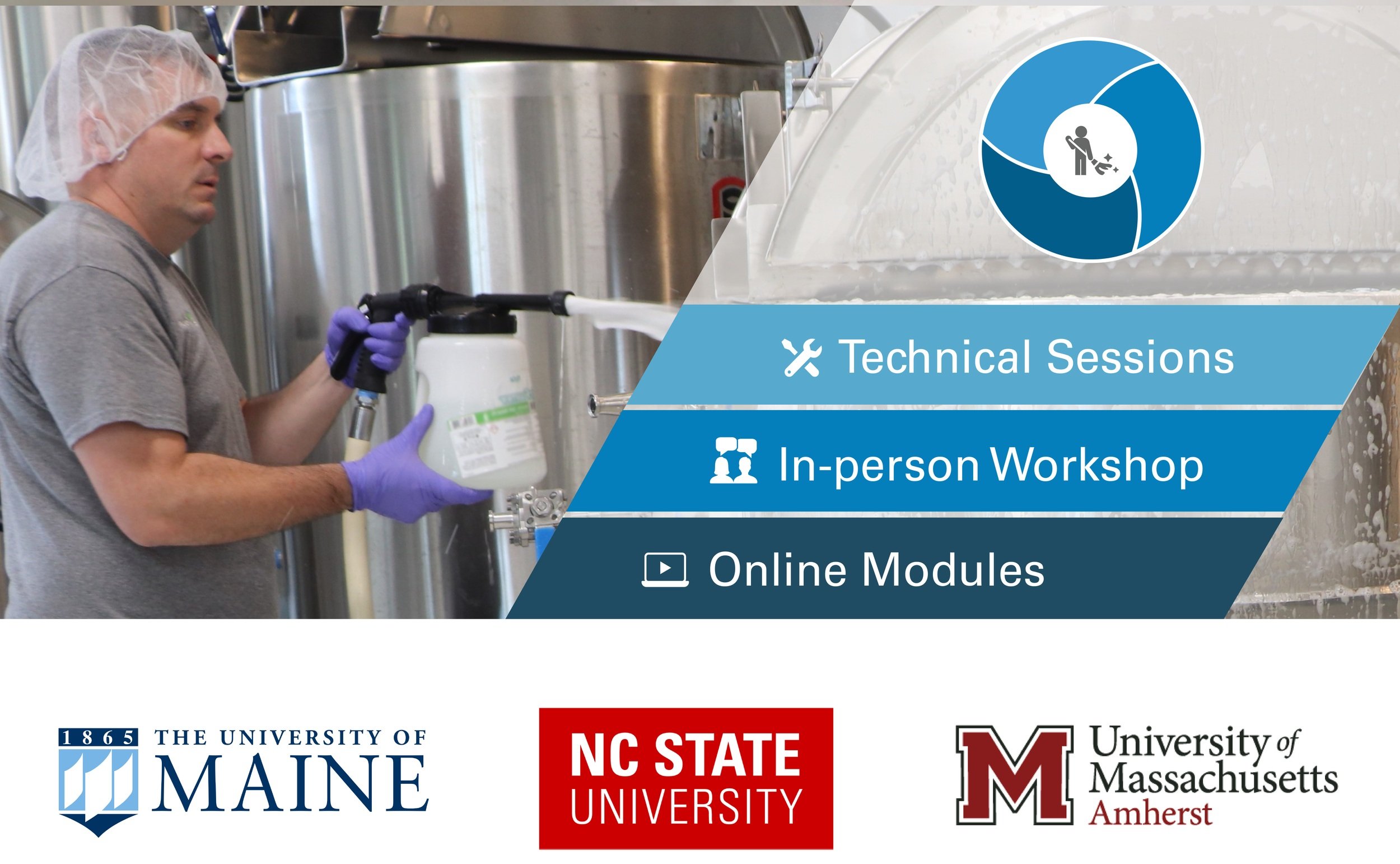
The Sanitation Control Practitioner Program (SCPP) is a hybrid sanitation program that utilizes self-paced online training modules, an in-person hands-on workshop, and a series of coaching webinars. These materials are based on job tasks associated with sanitation practitioners' roles. The program is designed to make information regarding cleaning and sanitation accessible and practical for smaller-scale and new processors to implement and manage a sanitation program confidently.
Program Components:
Part 1: Online training courses. The online modules are self-paced, allowing you to start, pause, resume, and complete the course at your convenience. The course will remember your progress. Upon successfully completing all lessons and knowledge checkpoints, you will receive a certificate of completion.
Cleaning and Sanitation Basics
Sanitation Tools and Supplies
Water for Cleaning and Sanitation
Chemicals for Cleaning and Sanitation
Sanitation Documentation
Sanitation Monitoring and Verification
Part 2: in-person Sanitation Workshop offers hands-on training with engaging activities. Participants can practice sanitation techniques and discuss best practices with the support of a live instructor. The course tracks your progress, and upon successfully completing all lessons and activities, you will receive a certificate of completion.
In-person workshop topics include:
Review of key cleaning concepts and practicing cleaning and visual inspections
Engage with and identify components of an SSOP
Review of cleaning activities and practicing verification activities of cleaning
Practice monitoring and verification of sanitizing
This program aims to introduce key sanitation concepts and provide hands-on learning experiences and technical support. This program helps processors build competencies relevant to sanitation tasks, ensuring alignment with implementing sanitation programs in food production facilities.
Part 3: Virtual coaching topics. TBD. The Part 3 virtual coaching sessions consist of a mini-lecture on a specific topic, followed by a group discussion where participants share best practices and receive technical support and resources relevant to their operations.
This is part of a 3-part series, with topics chosen based on participants' votes:
Best practices for developing SSOPs
Considerations for master sanitation schedules
How to assess and resolve a cleaning or sanitation non-conformance
Sanitation verification activities
Dry Cleaning
Disinfection
This self-paced, online curriculum was developed to assist small processors with sanitation training. It was developed by a collaborative group from the University of Maine, University of Massachusetts Amherst, and NC State University. There is a series of six courses, each of which consists of an interactive learning module with professional voiceover, and video:
Introduction to Sanitation
Cleaning and Sanitation Tools and Supplies
Water for Cleaning and Sanitation
Chemicals for Cleaning and Sanitation
Sanitation Documentation
Sanitation Monitoring and Verification
The courses are self-paced, which means you may begin, pause, continue, and finish the course at whatever schedule suits your needs. The course will remember where you left off. A certificate of completion will be available to you after you successfully complete each course and a program certificate once all six have been completed.
Course outlines:
1. Introduction to Sanitation: Students will be able to:
Identify the benefits of maintaining a sanitation program
Identify the difference between cleaning and sanitizing
Identify the basic steps of cleaning and sanitizing
Identify examples of manual, clean-in-place, and clean-out-of-place sanitation processes
Distinguish between wet and dry sanitation programs
2. Cleaning and Sanitation Tools and Supplies: Students will be able to:
Distinguish between the cleanliness or hygiene standards for low, medium, and high hygiene areas
Distinguish between a food-contact surface and a non-food-contact surface
Identify the appropriate utensils and equipment for cleaning a food contact surface and non-food contact surface
Explain and implement the concept of color-coding tools
3. Water for Cleaning and Sanitation: Students will be able to:
Identify regulatory standards for water used in food processing
Identify how and when to test water for its suitability for use in food processing
4. Chemicals for Cleaning and Sanitation
Select appropriate cleaning and sanitation chemicals for food and non-food contact surfaces
Identify types of soil or debris on surfaces
Describe secure and safe storage of cleaning and sanitation chemicals
Identify who is allowed to handle certain chemicals
5. Sanitation Documentation: Students will be able to:
Identify the components of a Sanitation Standard Operating Procedure
Identify how often to perform sanitation procedures using a risk-based approach
Identify the core components of a master sanitation schedule
Identify which surfaces need an SSOP in a given facility
6. Sanitation Monitoring and Verification: Students will be able to:
Identify best practices for cleaning and sanitizing monitoring activities
Identify what is to be written or entered and kept in sanitation records
Identify which environmental monitoring method to use in a given scenario
Determine corrective actions when given test results of general sanitation monitoring
Define verification
Identify best practices for cleaning and sanitizing verification activities
Review documentation and make observations to determine whether the cleaning and sanitation program is being implemented as designed
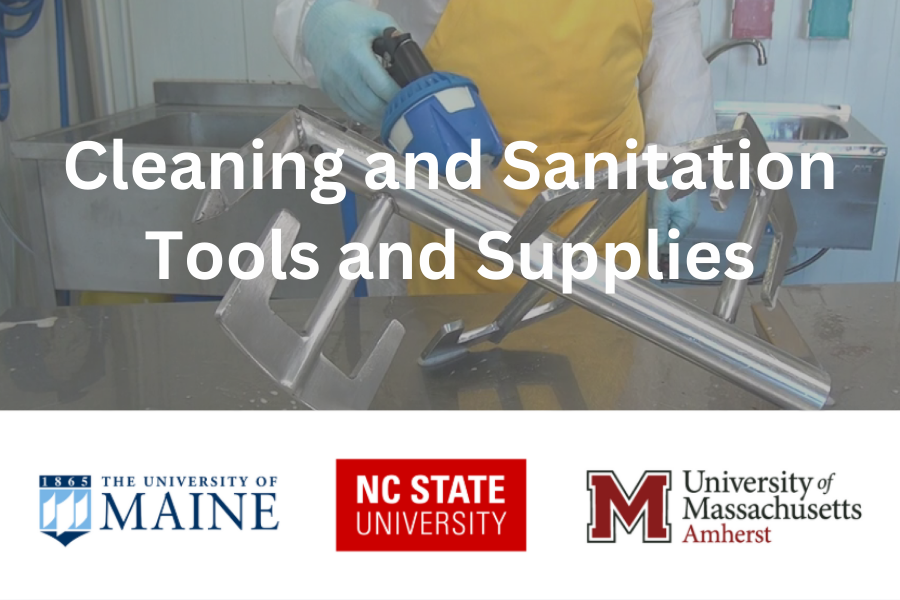
This module provides students with the skills to maintain hygiene standards across various areas. Participants will learn to distinguish between cleanliness levels for different hygiene areas, identify food-contact and non-food-contact surfaces, and select appropriate cleaning utensils and equipment. Additionally, the module covers the implementation of color-coding tools to enhance sanitation practices.
Learning Objectives: Cleaning and Sanitation Tools and Supplies: Students will be able to:
Distinguish between the cleanliness or hygiene standards for low, medium, and high hygiene areas
Distinguish between a food-contact surface and a non-food-contact surface
Identify the appropriate utensils and equipment for cleaning a food contact surface and non-food contact surface
Explain and implement the concept of color-coding tools
Course length: This course is self-paced and will take approximately 70 minutes.
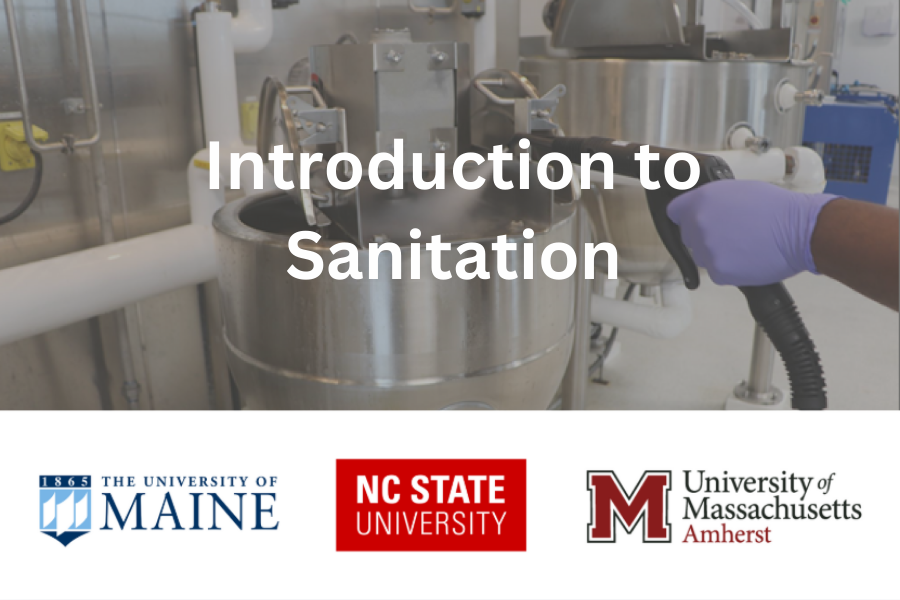
This module equips students with essential knowledge on sanitation practices. Participants will learn to identify the benefits of a sanitation program, differentiate between cleaning and sanitizing, and understand the basic steps involved. The course also covers various sanitation processes, including manual, clean-in-place, and clean-out-of-place methods, and distinguishes between wet and dry sanitation programs.
Learning Objectives: Introduction to Sanitation: Students will be able to:
Identify the benefits of maintaining a sanitation program
Identify the difference between cleaning and sanitizing
Identify the basic steps of cleaning and sanitizing
Identify examples of manual, clean-in-place, and clean-out-of-place sanitation processes
Distinguish between wet and dry sanitation programs
Course length: This course is self-paced and will take approximately 15 minutes.
Food Safety Video Series: HACCP Certificate Program
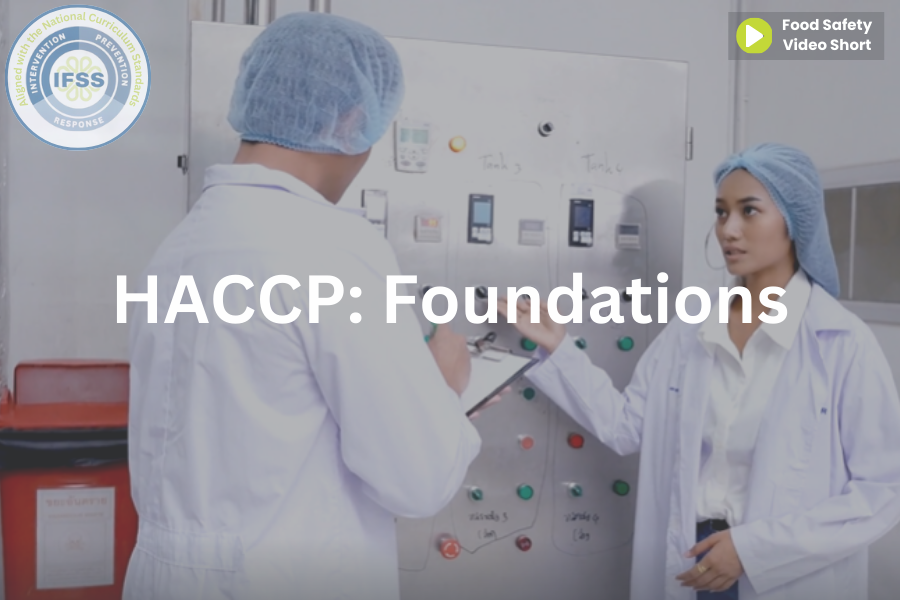
The HACCP: Foundations video resource provides introductory knowledge, skills, and abilities related to the hazard analysis and critical control points (HACCP) system in alignment with the National Curriculum Standards. Specifically, the video provides learners with the ability to:
Define relevant terminology
Recall the history of HACCP
Differentiate between voluntary and mandatory HACCP plans
Identify the seven principles of HACCP
Recognize the preliminary steps in developing a HACCP plan
Recognize the benefits of HACCP
Recognize the importance of management commitment
Video length: 11 minutes
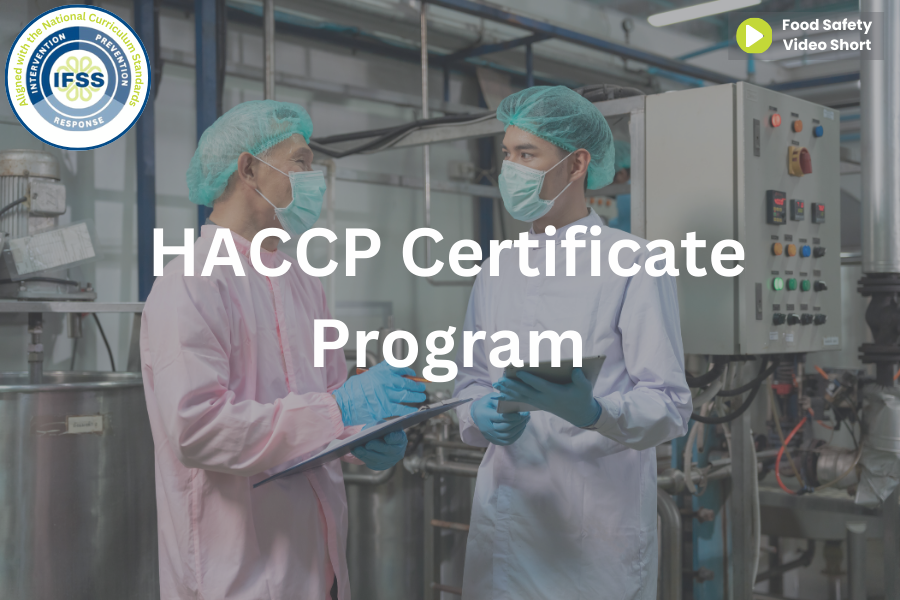
31 MIN + ASSESSMENT | 4 VIDEOS-12 MIN. OR LESS | EARN A CERTIFICATE OF COMPLETION IN LESS THAN 45 MINUTES
The HACCP Video Program includes all four video resources and the HACCP: Assessment.
The program resources provide introductory knowledge, skills, and abilities related to the hazard analysis and critical control points (HACCP) system in alignment with the National Curriculum Standards.
The HACCP: Preliminary Steps in the Development of a HACCP Plan video resource provides introductory knowledge, skills, and abilities related to the hazard analysis and critical control points (HACCP) system in alignment with the National Curriculum Standards. Specifically, the video provides learners with the ability to:
Recognize the importance of the HACCP team.
Recognize the importance of describing the food product and its distribution.
Recognize the importance of the intended use of the food product.
Recognize the importance of a detailed process flow diagram.
Recognize the importance of verifying the flow diagram.
Video Length: 9 minutes
The HACCP: Prerequisite Programs video resource provides introductory knowledge, skills, and abilities related to the hazard analysis and critical control points (HACCP) system in alignment with the National Curriculum Standards. Specifically, the video provides learners with the ability to:
Recognize the importance of a systematic approach in relation to the seven principles of HACCP.
Recognize the importance of a hazard analysis.
Define what is meant by “reasonably likely to occur.”
Differentiate between a critical control point and a critical limit
Recognize the relationship between a hazard that is reasonably likely to occur and a control procedure.
Define the elements of a corrective action.
Video Length: 4 minutes
The HACCP: Principles of HACCP video resource provides introductory knowledge, skills, and abilities related to the hazard analysis and critical control points (HACCP) system in alignment with the National Curriculum Standards.
Specifically, the video provides learners with the ability to:
Identify the importance of prerequisite programs.
Identify examples of prerequisite programs.
Differentiate between a Sanitation Standard Operating Procedure (SSOP) and a Standard Data Management.
Video Length: 11 minutes
The HACCP Assessment assesses introductory knowledge, skills, and abilities related to the hazard analysis and critical control points (HACCP) system in alignment with the National Curriculum Standards.
A certificate of completion is awarded to those participants who successfully answer 75% or more of the assessment questions. A retest option is available if needed.
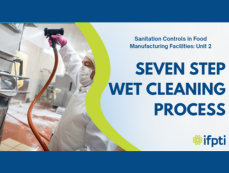
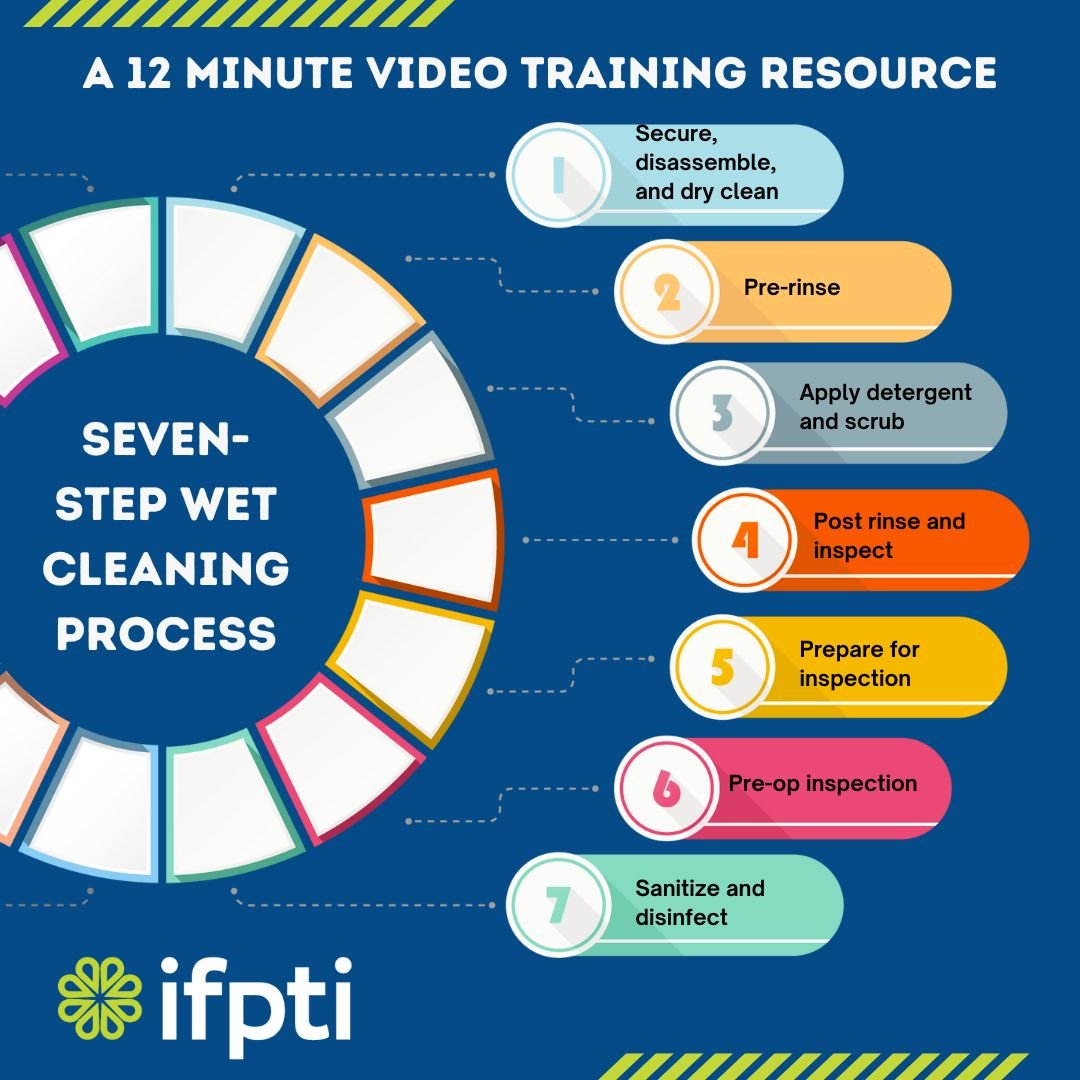
The Seven-Step Wet Cleaning Process is a standardized method for thoroughly cleaning and sanitizing surfaces, typically in food processing facilities, by following a specific sequence of steps ensuring a high level of hygiene and preventing cross-contamination; essentially aiming to completely remove dirt and microorganisms from equipment and surfaces through a methodical cleaning process.
This 7 minute video will allow you to identify pre-requisite steps to the Seven-Step Wet Cleaning process, recognize the sequential nature of the process, and recall each step without having to commit to a time intensive training course.
The Seven-Step Wet Cleaning Process is a standardized method for thoroughly cleaning and sanitizing surfaces, typically in food processing facilities, by following a specific sequence of steps ensuring a high level of hygiene and preventing cross-contamination; essentially aiming to completely remove dirt and microorganisms from equipment and surfaces through a methodical cleaning process.
This 7 minute video will allow you to identify pre-requisite steps to the Seven-Step Wet Cleaning process, recognize the sequential nature of the process, and recall each step without having to commit to a time intensive training course.













IFPTI has partnered with Responsible Training to provide the easiest way for you to get your alcohol seller or server course certifications based on the requirements in your state.
In many states, anyone who sells, serves, dispenses or delivers alcoholic beverages under the authority of a license or permit, including persons who immediately manage, direct, supervise or control the sale or service of alcoholic beverages, is required to undergo alcohol Seller Server Training.
Whether you manage a bar, restaurant or are new to the industry, an Alcohol Seller Server certificate from Responsible Training will teach you the best practices to serve alcohol responsibly and give you the knowledge to protect yourself from fines and lawsuits.