
Listeria Control
Control de Listeria
Explora la capacitación para el control de Listeria en la fabricación de alimentos, incluyendo el monitoreo ambiental, la zonificación higiénica, la sanitización, las BPM y el diseño de instalaciones, así como los controles de los sistemas de congelación. Desarrolla habilidades prácticas para ayudar a prevenir y gestionar los riesgos de Listeria en entornos de producción de alimentos.

Este curso cubre la importancia de la zonificación higiénica en el control de Lm, junto con las actividades asociadas de monitoreo, verificación y evaluación de riesgos.
Al terminar este curso, usted será capaz de:
Definir qué es la zonificación higiénica
Reconocer el propósito de las evaluaciones de riesgos para establecer las zonas higiénicas
Seleccionar las cuatro zonas higiénicas ambientales,
Identificar las barreras para controlar la entrada a áreas higiénicas de alto riesgo
Identificar las actividades de monitoreo y verificación asociadas con las zonas higiénicas
Duración del curso: 1.25 horas

El programa de Especialista en Control de Listeria está diseñado para la gestión de certificados de seguridad alimentaria en instalaciones de fabricación de alimentos cuyas responsabilidades incluyen la preparación, producción, envasado y almacenamiento.
Los participantes que completen el programa de certificación de cinco cursos serán reconocidos formalmente como expertos, designados para controlar Listeria monocytogenes (Lm) dentro de sus instalaciones. Otros que pueden beneficiarse de participar en estos cursos incluyen funcionarios reguladores, profesionales de sanidad y calidad, contratistas de construcción y mantenimiento, o cualquier persona que desee aprender a controlar Lm en las instalaciones de fabricación de alimentos.
El Especialista en Control de Listeria paquete incluye los siguientes cinco cursos: BPMs, Zonificación higiénica, Diseño higiénico de instalaciones y equipos, Controles de saneamiento y Monitoreo ambiental.

Este curso cubre el papel de las GMP para controlar los riesgos asociados con la presencia y el crecimiento de Lm en las instalaciones de producción de alimentos.
Al terminar este curso, podrá reconocer:
Los elementos clave de las BPMs con referencia especial a los riesgos asociados con la presencia y el crecimiento de Listeria monocytogenes (Lm) en las instalaciones de producción de alimentos
La importancia de implementar las BPMs de manera efectiva para prevenir y controlar la introducción y el crecimiento de Listeria monocytogenes en las instalaciones de producción de alimentos
El papel de los comportamientos/prácticas del personal y la gestión en la implementación de BPMs efectivas en la producción de alimentos
El papel de las políticas y procedimientos de producción que son clave en la implementación de BPMs efectivas en la producción de alimentos
La importancia crítica del uso controlado del agua en las instalaciones para mitigar los riesgos relacionados con Listeria monocytogenes
Duración del curso: 1.25 horas
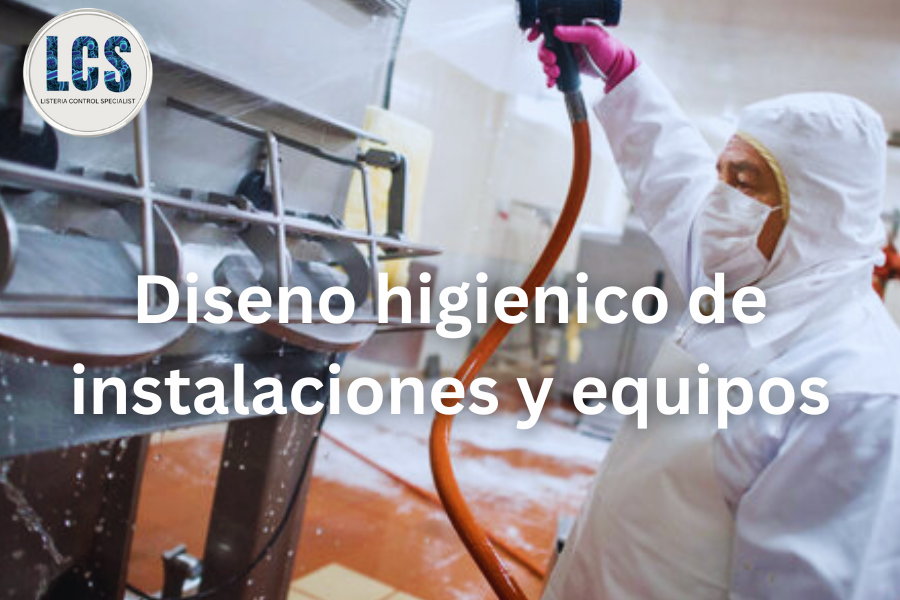
El objetivo de este curso es reconocer la importancia del diseño higiénico y su relación con el control y la prevención de Listeria.
Al terminar este curso, debería poder:
Reconocer el objetivo del diseño higiénico en la gestión de la inocuidad de los alimentos,
Reconocer los buenos elementos de diseño y
Reconocer los elementos de mal diseño.
Duración del curso: 2.25 horas

El curso lo apoyará en su desarrollo profesional y lo ayudará a prepararse para ser un valioso colaborador en la misión del equipo de monitoreo ambiental (EM, por sus siglas en inglés) para “buscar y destruir” Listeria monocytogenes en las instalaciones de producción de alimentos.
Al terminar este curso, será capaz de:
Definir lo que es el monitoreo ambiental
Desarrollar un plan de monitoreo ambiental
Definir los pasos para implementar un plan de muestreo ambiental
Discernir entre varios métodos de análisis, recopilación y gestión de datos
Reconocer el significado de Listeria monocytogenes y Listeria spp. persistente y transitoria
Levar a cabo un análisis causa -raíz y un programa de acciones correctivas
Duración del curso: 2.5 horas

Este paquete consta de los siguientes cinco cursos: prevención y control de virus entéricos en ambientes de producción y procesamiento de alimentos – Introducción sobre los virus entéricos transmitidos por los alimentos; salud e higiene del trabajador; control en el uso agua; el papel del equipo y las herramientas; y manejo de desechos. Si adquiere este paquete estará inscrito en los 5 cursos. A partir del momento de su inscripción tendrá 6 meses para terminar los 5 cursos. Al finalizar, también recibirá el certificado del programa para el control de los virus entéricos que tiene una vigencia de tres años, después de los cuales puede renovarlo.
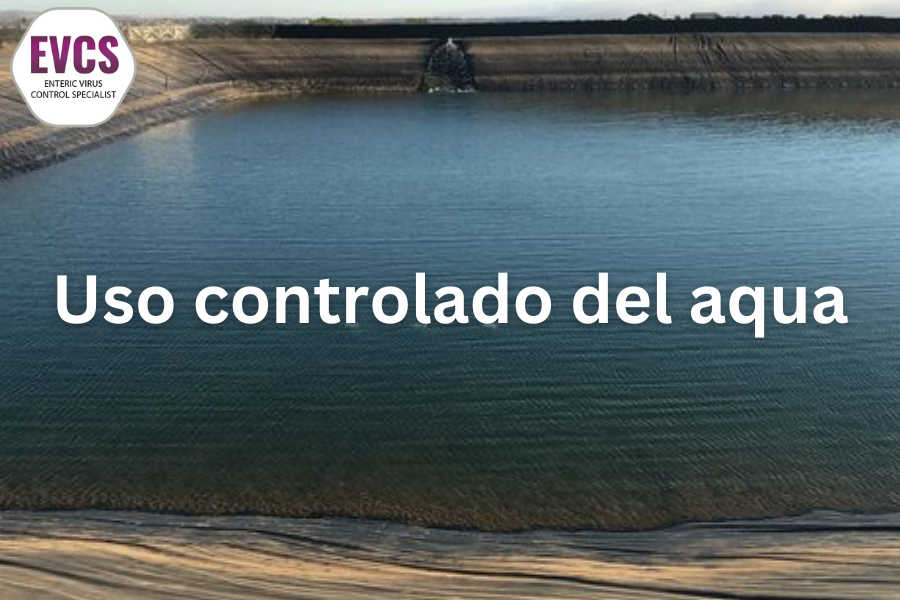
Al terminar este curso podrá reconocer:
El proceso de evaluación de riesgos de la fuente de agua
La importancia del análisis del agua de uso agrícola
La importancia de la calidad del agua usada para riego, lavado de producto cosechado, y procesamiento
La importancia del agua usada en el procesamiento de producto agrícolas
Duración del curso: 1 hora
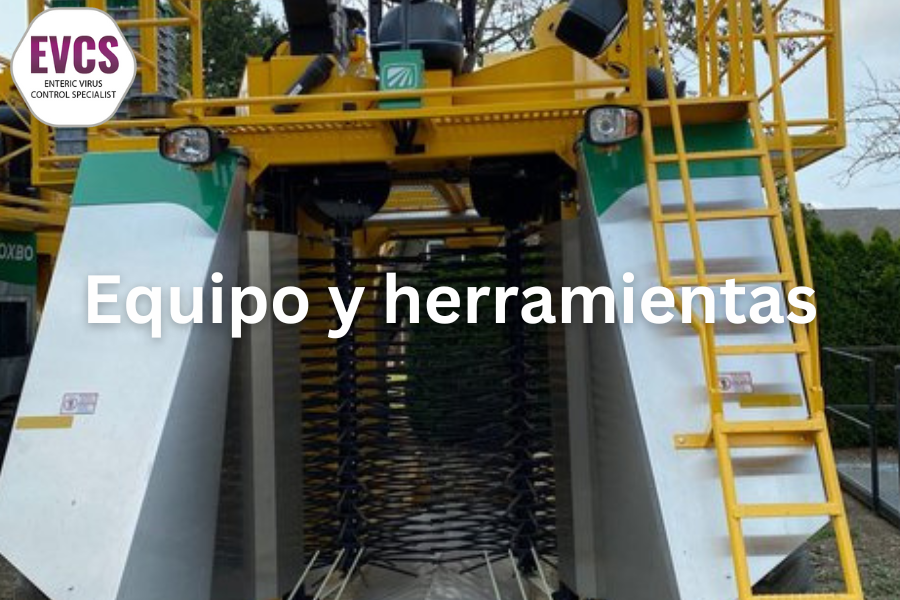
Al terminar este curso podrá reconocer:
La importancia de la limpieza y saneamiento de las herramientas y equipo
La importancia de limpiar los vehículos usados para transportar producto cosechado
La importancia de las condiciones higiénicas durante el almacenamiento
Duración del curso: 40 minutos
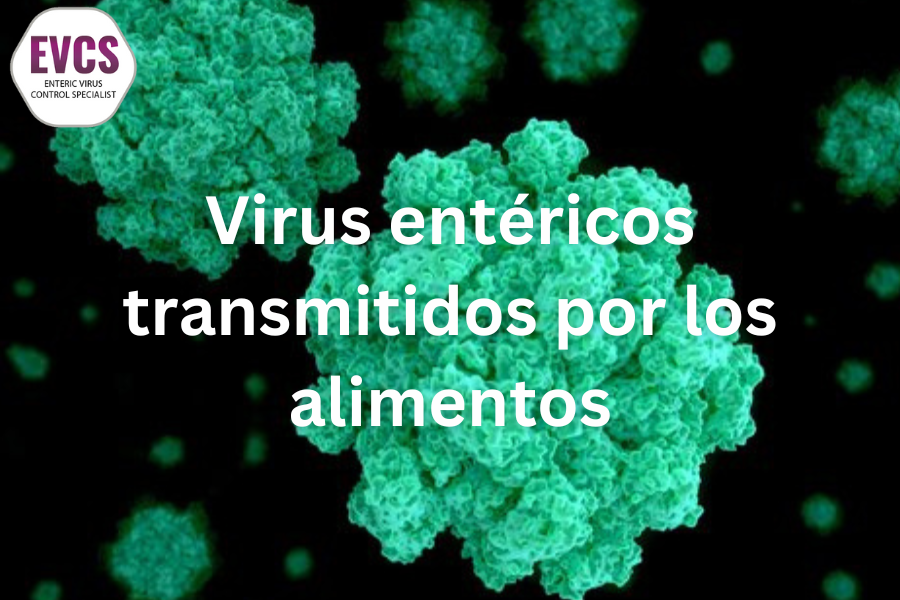
Al terminar este curso podrá reconocer:
Cómo pueden transmitirse el Norovirus y el virus de la Hepatitis A
Los síntomas de infección por Norovirus y virus de la Hepatitis A
Cómo prevenir la propagación de Norovirus y del virus de la Hepatitis A
Duración del curso: 40 minutos
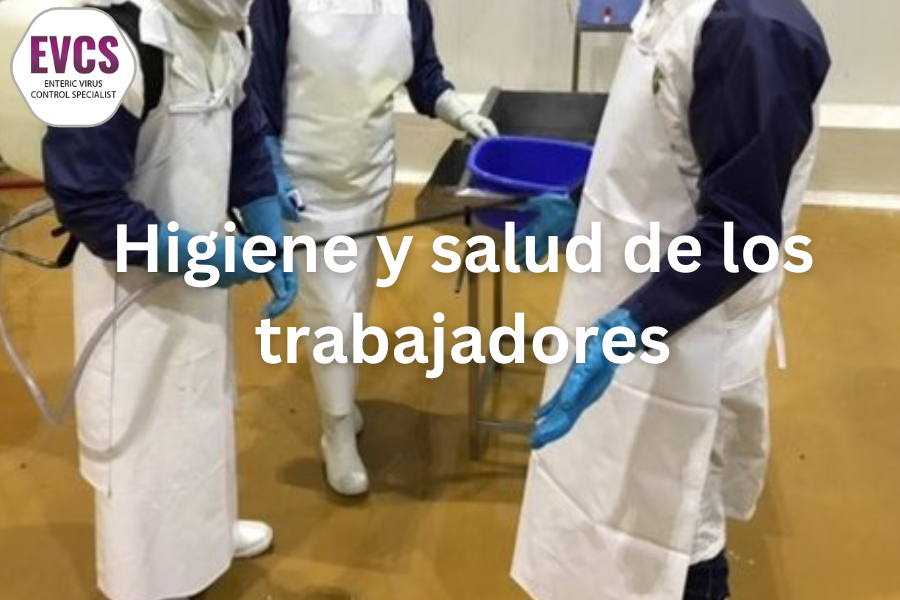
Al terminar este curso podrá reconocer:
Cómo los empleados pueden prevenir la propagación de Norovirus y virus de la Hepatitis A
Las medidas que los agricultores, productores y procesadores pueden implementar para prevenir la propagación de virus entéricos entre los trabajadores y hacia los alimentos
Duración del curso: 35 minutos
Enteric Virus
Virus entérico
Capacitación en prevención de enfermedades entéricas para profesionales de la seguridad alimentaria y trabajadores de salud pública.
Al terminar este curso podrá reconocer:
El papel que tiene la inspección del campo/huerta en relación con el manejo de residuos y la evidencia de actividades de riesgo
Criterios de cosecha relacionados con el manejo de residuos
Mantener las condiciones higiénicas en las áreas de empaque y procesamiento
Procedimientos de limpieza de fluidos corporales
Procedimientos para la disposición de residuos
Duración del curso: 1 hora

Descripción del Curso
Conocimientos introductorios, habilidades y capacidades relacionadas con el sistema de Análisis de Peligros y Puntos Críticos de Control (HACCP).
Los participantes podrán conocer los principios del HACCP.
Alcance: Los temas de este curso incluyen Fundamentos, Principios de HACCP, Programas de Prerrequisitos y Pasos preliminares en el desarrollo de un Plan HACCP.
Objetivos del Curso
Fundamentos
*Definir terminología relevante.
*Recordar la historia de HACCP.
*Diferenciar entre planes HACCP voluntarios y obligatorios.
*Identificar los siete principios de HACCP.
*Reconocer los pasos preliminares para desarrollar un plan HACCP.
*Reconocer los beneficios del HACCP.
*Reconocer la importancia del compromiso por parte de la gerencia.
Principios de HACCP
*Identificar la importancia de los Programas de Prerrequisitos.
*Identificar ejemplos de Programas de Prerrequisitos.
*Diferenciar entre un Procedimiento Operativo Estándar de Saneamiento (SSOP) y una Gestión de Datos Estándar
Programas de Prerrequisitos
*Reconocer la importancia de un enfoque sistemático en relación con los siete principios de HACCP.
*Reconocer la importancia de un análisis de peligros.
*Definir lo que se entiende por "razonablemente probable que ocurra".
*Diferenciar entre un punto de control crítico y un límite crítico.
*Reconocer la relación entre un peligro que es razonablemente probable que ocurra y un procedimiento de control.
*Definir los elementos de una acción correctiva.
Pasos Preliminares en el Desarrollo de un Plan HACCP
*Reconocer la importancia del equipo HACCP.
*Reconocer la importancia de describir el producto alimenticio y su distribución.
*Reconocer la importancia del uso previsto del producto alimenticio.
*Reconocer la importancia de un diagrama de flujo de proceso detallado.
*Reconocer la importancia de verificar el diagrama de flujo.
*Duración
*Unidad 1: Fundamentos - 25 minutos
*Unidad 2: Principios de HACCP - 15 minutos
*Unidad 3: Programas de Prerrequisitos: 20 minutos
*Unidad 4: Pasos preliminares en el desarrollo de un plan HACCP - 25 minutos
*Total: 2 horas
HACCP Training in Spanish
Capacitación HACCP en español
Explora los cursos de capacitación HACCP de IFPTI, diseñados para desarrollar habilidades prácticas en inocuidad alimentaria, desde los fundamentos de HACCP y los programas prerrequisito hasta el desarrollo de planes, la certificación y la capacitación especializada en HACCP. Hay opciones en línea disponibles para distintos niveles de experiencia, incluidos cursos en español.

Después de completar este módulo, será capaz de:
Seleccionar los productos químicos para la limpieza y el saneamiento adecuados de las superficies de contacto y de las superficies que no están en contacto con alimentos.
Describir el almacenamiento seguro y protegido de los productos químicos para la limpieza y el saneamiento (almacenamiento bueno, mejor, el mejor, u óptimo); y
Determinar si las situaciones de almacenamiento de productos químicos presentadas cumplen con la normativa
Sanitation Training
Capacitación en saneamiento
Cursos de capacitación en saneamiento para instalaciones alimentarias: protocolos de limpieza, desinfección e higiene.
Después de completar este módulo, será capaz de:
Identificar los estándares reglamentarios del agua utilizada en el procesado de alimentos
Identificar cómo y cuándo analizar el agua para determinar si es apta para su uso en el procesado de alimentos
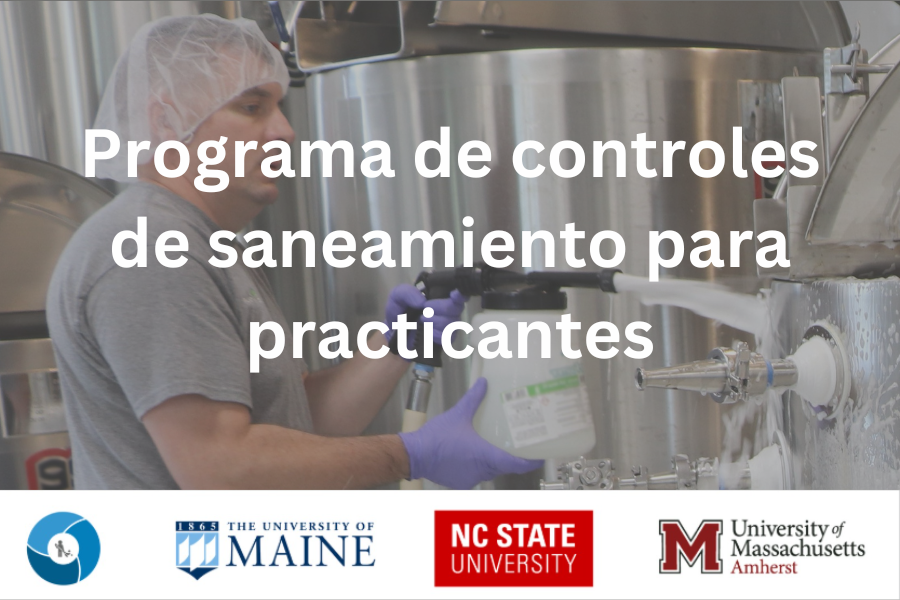
Este plan de estudios en línea, a tu propio ritmo, fue desarrollado para ayudar a los pequeños procesadores con la capacitación en saneamiento. Fue desarrollado por un grupo colaborativo de la Universidad de Maine, la Universidad de Massachusetts Amherst y la Universidad Estatal de Carolina del Norte (NC State University). Hay una serie de seis cursos, cada uno de los cuales consta de un módulo interactivo de aprendizaje con narración profesional y video:
Conceptos básicos de la limpieza y el saneamiento
Herramientas y suministros de limpieza y saneamiento
Agua para la limpieza y el saneamiento
Productos químicos para la limpieza y el saneamiento
Documentación de saneamiento
Monitoreo y verificación del saneamiento
Los cursos son a tu propio ritmo, lo que significa que puedes comenzar, pausar, continuar y terminar el curso según el horario que mejor se adapte a tus necesidades. El curso recordará en qué parte lo dejaste. Tendrás disponible un certificado de finalización después de completar con éxito cada curso, y un certificado del programa una vez que hayas completado los seis.
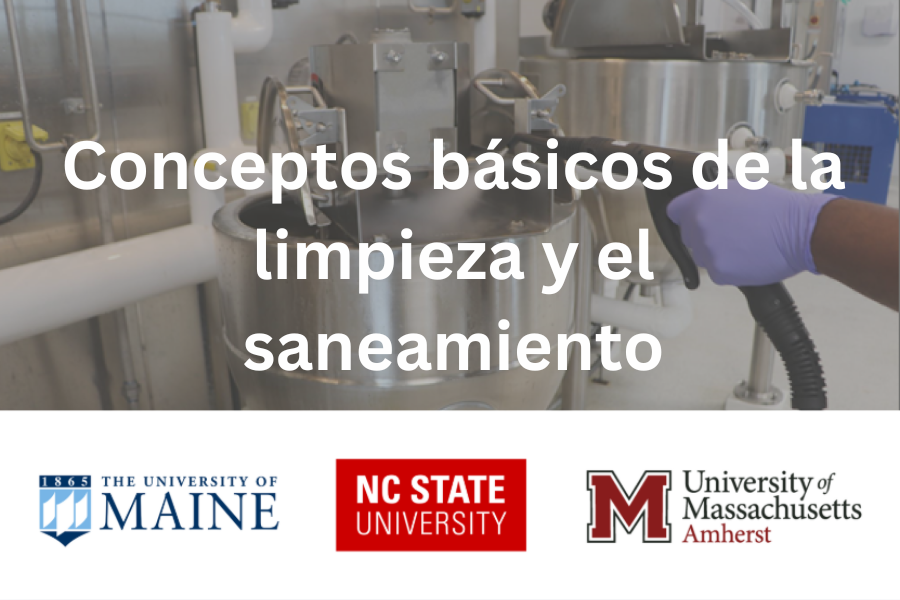
Al final de este módulo, será capaz de:
Identificar los beneficios de mantener un programa de saneamiento.
Identificar la diferencia entre limpieza y sanitización.
Identificar los pasos básicos de la limpieza y sanitización.
Identificar ejemplos de procesos de saneamiento manuales, de limpieza in situ y de limpieza fuera del lugar
Distinguir entre programas de saneamiento húmedo y en seco.
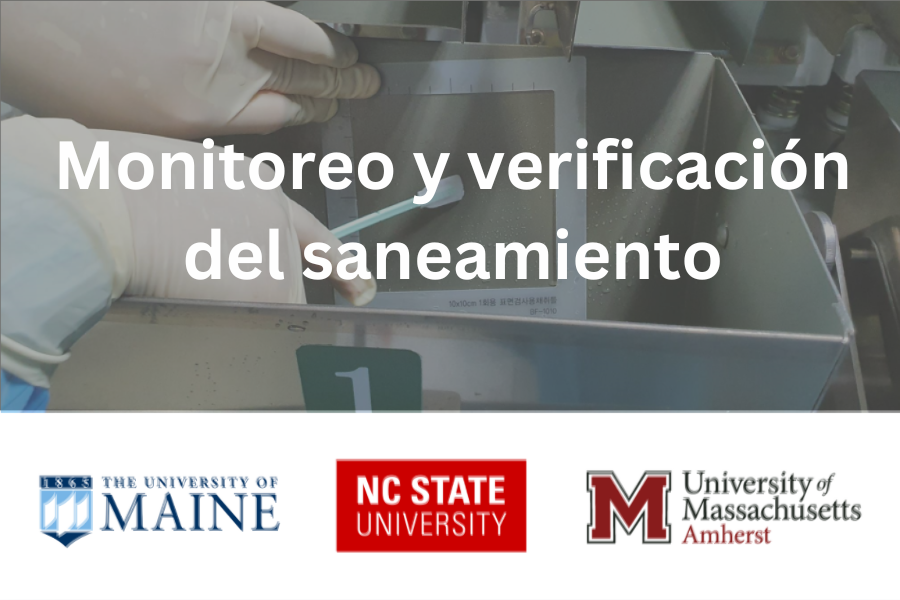
Después de completar este módulo, será capaz de:
Identificar las mejores prácticas de limpieza y sanitización en las actividades de monitoreo
Identificar lo que se escribe o anota y conserva en los registros de saneamiento
Determinar qué método de monitoreo ambiental utilizar en una situación determinada.
Determinar acciones correctivas cuando se obtengan resultados de análisis del monitoreo general del saneamiento.
Definir la verificación
Identificar las mejores prácticas para las actividades de verificación de limpieza y sanitización
Revisar la documentación y realizar observaciones para determinar si el programa de limpieza y saneamiento se está aplicando según lo previsto.
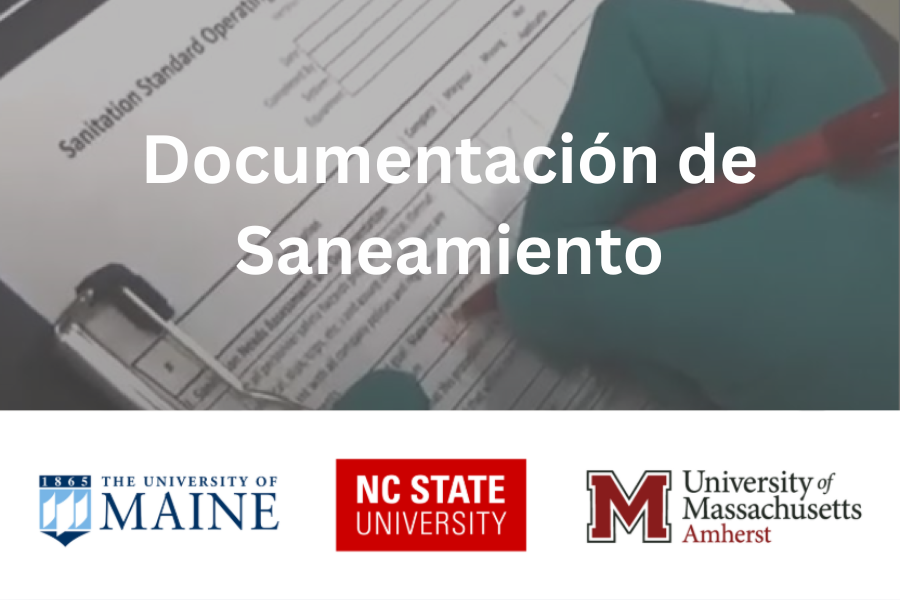
Después de completar este módulo, será capaz de:
Identificar los componentes de un Procedimiento Operativo Estándar de Saneamiento (POES)
Identificar con qué frecuencia realizar los procedimientos de saneamiento utilizando un enfoque basado en el riesgo
Identificar los componentes principales de un calendario maestro de saneamiento
Identificar qué superficies necesitan un POES en una instalación determinada
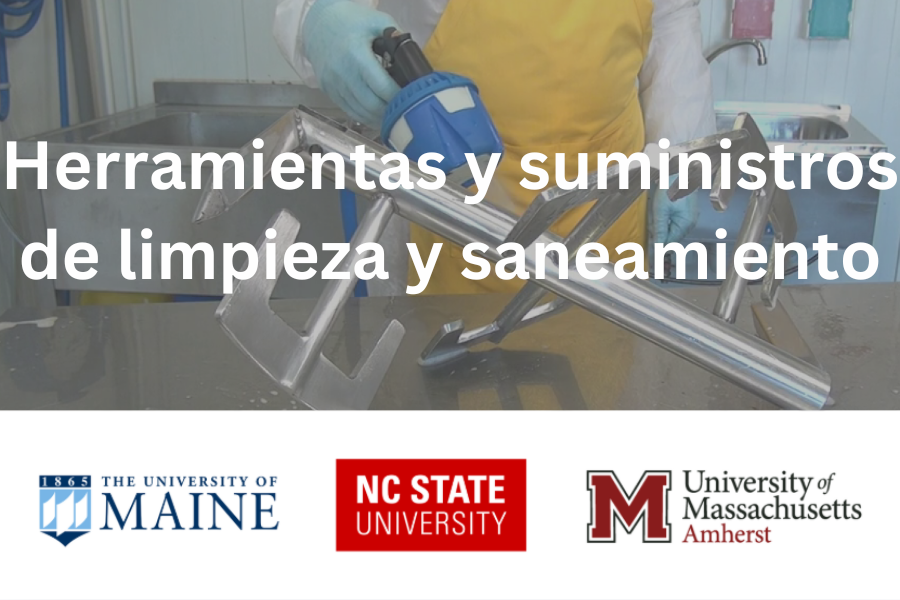
Después de completar este módulo, será capaz de:
Distinguir entre los estándares de limpieza o higiene para áreas de baja, media y alta higiene
Distinguir entre una superficie en contacto con alimentos y una superficie que no está en contacto con alimentos
Identificar los utensilios y equipos adecuados para limpiar una superficie en contacto con alimentos y una superficie que no está en contacto con alimentos
Explicar e implementar el concepto de codificación por colores de las herramientas
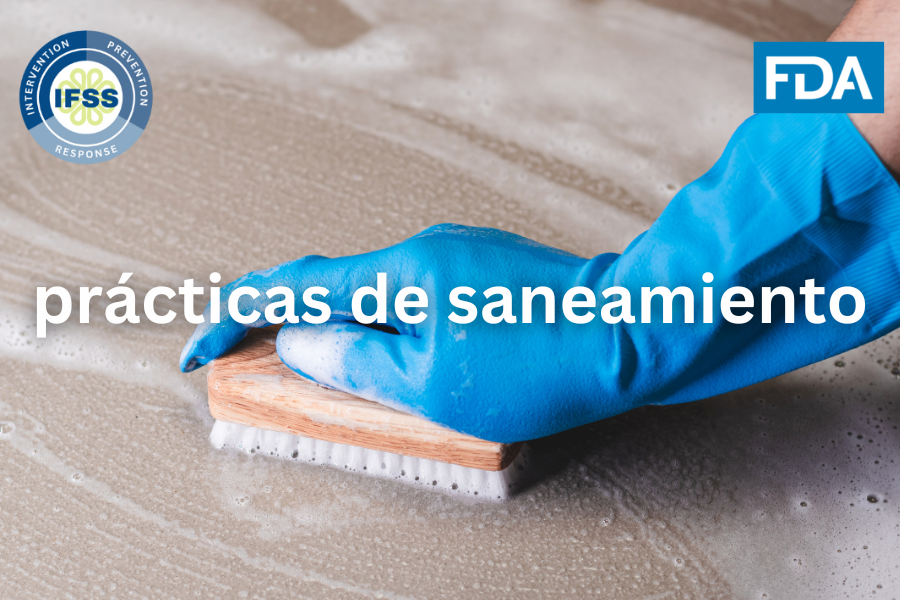
Descripción del curso
Conocimientos introductorios, habilidades y habilidades relacionadas con la limpieza, desinfección y desinfección, y la importancia del diseño sanitario de las instalaciones y los equipos.
(a) Meta: Describir la importancia del diseño y las prácticas sanitarias.
(b) Alcance: Este curso consistirá en conocimientos introductorios, destrezas y habilidades relacionadas con la limpieza, desinfección y desinfección, así como la importancia del diseño sanitario de las instalaciones y equipos. Los temas incluyen fundamentos de saneamiento, limpieza, sanitización, desinfección, ingeniería sanitaria y recursos educativos.
Objetivos del Curso
TLO 1: Discutir las prácticas de saneamiento y el diseño sanitario de las instalaciones y el equipo.
ELO 1: Discutir el diseño sanitario de instalaciones y equipos.
ELO 2: Discutir la importancia de las BPM, las GRP y las BPA.
ELO 3: Describir los principios de saneamiento.
ELO 4: Describir el propósito de los SSOP.
ELO 5: Describir la importancia de la capacitación en higiene de los empleados.
ELO 6: Dar ejemplos de registros de seguimiento.
ELO 7: Hablar sobre la química del agua.
TLO 2: Discutir el proceso de remoción de material visible como tierra, suciedad y materia orgánica de las instalaciones y equipos.
ELO 1: Describir los factores que afectan la eficacia de los agentes de limpieza.
ELO 2: Explicar cómo la química del agua puede afectar a los agentes de limpieza.
ELO 3: Discutir los tipos de agentes de limpieza y su función en la tierra.
ELO 4: Describir los métodos de limpieza.
ELO 5: Explicar la importancia de seguir las instrucciones de uso del fabricante.
Duración
Unidad 1: Fundamentos - 58 minutos
Unidad 2: Limpieza - 30 minutos
Unidad 3: Sanitización - 27 minutos
Unidad 4: Desinfección - 24 minutos
Unidad 5: Ingeniería Sanitaria - 16 minutos
Unidad 6: Fuentes y rutas de contaminación - 47 minutos
Estimación total del curso: 3 horas y 22 minutos
HR Compliance Training
Capacitación sobre cumplimiento de RR. HH.
Capacitación de cumplimiento de RR. HH. para la industria alimentaria: seguridad en el trabajo, normativas y mejores prácticas.

OSHA stresses the importance of reporting and investigating incidents that cause injury or illness on your job sites. An incident is an occurrence during work that resulted in injury, illness, or property damage. The purpose of an incident investigation is to uncover the root cause of the occurrence and assign corrective actions so that your employees feel safe at work. This is not about assigning blame. The investigation and tracking of incidents allow your company to understand safety risks and proactively use training or interventions to prevent future incidents.
In this program, we will dig more into the proactive ways to address incidents.
Please use the Firefox browser to access this resource after enrollment.
Duration: 20 minutes

Sexual harassment in the workplace environment is uncomfortable and uncalled for situation. It can happen with managers and supervisors as well as employees. With Atlantic Training’s premier safety video Sexual Harassment for Managers, your management team will learn what sexual harassment is, how to deal with it, and how to report it. They’ll learn what Quid-Pro-Quo is and what to do when an employee comes forward.
Please use the Firefox browser to access this resource after enrollment.
Duration: 36 minutes

“The Power of Positive Thinking” – have you heard this phrase before? Everyone generally agrees on the goal of seeking or maintaining personal happiness. We often are also concerned about the well-being of others. In pursuit of this happiness, we might consider work as simply an obstacle or annoyance. Taking a positive approach to the workplace allows us to extend this pursuit to our careers and professional relationships. According to the U.S. Bureau of Labor Statistics, on average we work more than most typical household and leisure activities combined. In other words, we typically spend more time interacting at work than we do with family or friends. Given this, workplace positivity is necessary for the health of most of our daily interactions. It is also the key to providing superior customer service, avoiding the harmful effects of toxic work environments, and enjoying what is effectively a huge chunk of your life. Topics Covered Include: Self-Reflection: How do you approach work? Building a Positive Workplace Culture Benefits of Positivity at Work What is my role? Next Steps… and more!
Please use the Firefox browser to access this resource after enrollment.
Duration: 22 minutes
In this comprehensive course on workplace harassment training for industrial settings, we delve into the many facets of this critical issue, including its definition, various forms, and impact on employees and the work environment. You'll learn about the different types of harassment, such as verbal, physical, visual, cyber, sexual, discriminatory, and bullying, as well as the unique challenges faced in industrial work settings. We'll discuss the crucial roles both employers and employees play in preventing and addressing harassment. Employers will learn how to establish effective policies and reporting processes, while employees will discover how to recognize the signs of harassment and report incidents early. By the end of this course, you'll be equipped with the knowledge and tools necessary to foster a safe, inclusive, and respectful work environment for everyone.
Please use the Firefox browser to access this resource after enrollment.
Duration: 28 minutes

What do you think of when you hear the words “Leader, Supervisor; Manager”? You may have had positive or negative experiences with past supervisors. Think back to these leadership examples. What about them would you imitate? What would you avoid? As a supervisor, it is important to gain a strong understanding of your direct reports’ personalities. Some employees will react to stressors - like change, or work challenges - in different ways. They will also communicate and interact with each other differently. In fact, there are recognized personality categories across which we all tend to fit. Leadership styles are also divided into categories. This list commonly includes: authoritarian, participative, delegative, transactional, and transformational. Authoritarian leaders take the reins and clearly define direction and expectations. Participative leaders include employees in decision-making. Delegative leaders divide up tasks and give creative control to employees - typically based on team members' skill sets and strengths. Transactional leadership rewards the efficient completion of organizational goals. There are direct consequences for poor performance. Transformational leaders ask team members to pursue a shared vision that they champion and support. There are pros and cons to each leadership style. First, identify which style most fits your tendencies. Then learn to apply different approaches based on organizational, employee, and external stakeholder needs. Which of the five leadership styles best describes your own management approach? What type of leader do you want to be?
Please use the Firefox browser to access this resource after enrollment.
Duration: 22 minutes
Closed Caption: English, Spanish, French

Are you ready to take your team to the next level? Could your company benefit from a strong dose of “Doc Awesome’s Workplace Culture Adjuster Fluid”? Then step into our service bay – we’ve got you covered! In this training, we’ll first explore the power of positive thinking. Your attitude matters - and the reality is that you can’t hide negativity from those you’re around the most (your coworkers). Instead, you’ve got to rely on framing your mindset positively and asking yourself the big questions: Am I happy here? If not, can I still stay positive? What can I control? It’s hard to stay positive in an environment where you don’t feel like you belong, though. The next step in building a positive workplace culture is to make sure it’s one where diversity, equity, and inclusion are core values that permeate your company from hiring to conversations to policies. That sense of belonging should…well, belong to everyone! Next, imagine what an effective team looks like. Or maybe it’s easier for you to imagine an ineffective team..! If that’s the case, this component of the training is going to really resonate with you – so get ready to walk away with some winning strategies to improve your workplace and take on the role of Teambuilder Extraordinaire. Not full yet? Ready for a second helping at the buffet table of workplace culture awesomeness? The training rounds out with some meat-n-potatoes where we’ll really dive into skills like decision-making, upskilling, time management, and the ever-important skill of effective problem-solving. You definitely don’t want to stop halfway through this training! So get ready to dive in and walk away empowered.
Please use the Firefox browser to access this resource after enrollment.
Duration: 24 minutes

“The Power of Positive Thinking” – have you heard this phrase before? Everyone generally agrees on the goal of seeking or maintaining personal happiness. We often are also concerned about the well-being of others. In pursuit of this happiness, we might consider work as simply an obstacle or annoyance. Taking a positive approach to the workplace allows us to extend this pursuit to our careers and professional relationships. According to the U.S. Bureau of Labor Statistics, on average we work more than most typical household and leisure activities combined. In other words, we typically spend more time interacting at work than we do with family or friends. Given this, workplace positivity is necessary for the health of most of our daily interactions. It is also the key to providing superior customer service, avoiding the harmful effects of toxic work environments, and enjoying what is effectively a huge chunk of your life. Topics Covered Include: Self-Reflection: How do you approach work? Building a Positive Workplace Culture Benefits of Positivity at Work What is my role? Next Steps …and more!
Duration: 22 minutes
Closed Caption:
Did you know that employees who struggle with substance abuse are more likely to have an on-the-job accident? Through maintaining a drug-free workplace, employers can prevent critical accidents from occurring, reduce the turnover rate, and protect the safety of all employees. Reasonable suspicion drug testing can be used by employers across the U.S. in a variety of industries, and each state and industry may have its laws for which company policies must be written and communicated. In this training, we’ll provide you with tools on how to recognize and deal with employees who are showing signs of personal and performance-based concerns that could be directly related to alcohol or other substances. We’ll help you in understanding your organization’s policy and addressing the issue which is an essential step for advancing corrective action. This training will also provide you with knowledge on how to recognize signs and problems, voice reasonable suspicion, crisis response, and the documentation process. There are several steps an employer can take to recognize potential problems and then implement appropriate protocols to address the issues. This training will answer the question, “How can I recognize signs and problems with an employee that could be related to alcohol or other drugs?”, through a step-by-step action plan you can implement in your organization to directly coincide with your policy and program. Does the situation require reasonable suspicion testing? This training will address the importance of preparing for a crisis event should one occur. It will assist you in determining whether you have an employee with a performance problem in which substance use may be a factor. Guidelines for making an appropriate referral should you need to, will also be addressed in the training.
Please use the Firefox browser to access this resource after enrollment.
Duration: 24 minutes
Closed Caption: English

Teamwork. You’ve no doubt heard this word used in many contexts. As a child, you might have used it to describe what should take place in sports, clubs, or other combined efforts. What does “teamwork” mean to you? Do you feel that you are on a team? How’s that going for you? Are you enjoying the team you’re on? Maybe you’ve just started a new job, or possibly your workplace is ramping up to improve how everyone works together. Teamwork is defined as more than one person working together toward a shared goal. In its basic form, teamwork doesn’t actually require fun, happiness, mutual respect, or any of the positives that form what we think of as an ideal “team.” This training is built on the assumption that you care about building a culture of positive teamwork, where those aspects of being on a team are valued. We will discuss the characteristics of effective teams, the benefits of building a culture of working together, and the challenges faced by workplace teams. You will also learn some key strategies for nurturing teamwork – including what teamwork looks like in a digital world. Are you ready to do your part to build a positive work environment as part of a team? Take notes as you go through this training. Keep track of any ideas you come up with, and then share them with your co-workers afterward or take this training together and discuss as you go!
Please use the Firefox browser to access this resource after enrollment.
Duration: 26 minutes
Closed Caption: English, Spanish, French
In this course, you'll gain valuable insights into tackling workplace challenges through a structured five-step problem-solving process. Regardless of your professional level or industry, this course will empower you with the tools and techniques needed to overcome obstacles with confidence and a positive mindset. Throughout the course, you will learn how to: Define the Problem: Accurately identify and establish clear problem statements that address the root cause of the issue. Gather Information: Utilize various methods to collect data and gain a comprehensive understanding of the problem and its underlying causes. Generate Solutions: Apply creative techniques to brainstorm potential solutions, focusing on addressing both root causes and symptoms. Evaluate Solutions: Use different evaluation methods to assess the cost, feasibility, effectiveness, risks, and expected outcomes of potential solutions. Implement & Monitor Solutions: Develop and execute a detailed implementation plan, monitor the progress using key performance indicators, and continuously refine your solution based on feedback and changing circumstances. By the end of this course, you will have the knowledge and practical skills to approach workplace challenges with a positive problem-solving mindset, turning obstacles into opportunities for growth and improvement.
Duration: 26 minutes
Raise your hand if you’re having a hard time disconnecting from work. Working from home blurs the line between personal time and work hours. This training will provide some strategies to help you create those boundaries or best practices to help you work efficiently and safely remotely. Some strategies are: Setting up a dedicated workspace with good ergonomics Practicing good time management Using good remote work etiquette Finding ways to collaborate virtually and setting and following good work boundaries Practicing these strategies will set you up for future success either as an employee or manager.
Please use the Firefox browser to access this resource after enrollment.
Duration: 20 minutes
Closed Caption: English, Spanish, French

Are you struggling with feeling confident in the workplace? Looking for tools to increase collaboration effectively within your team? Then this all-inclusive course may be exactly what's needed! This comprehensive program will enhance your ability to make decisions, boost self-confidence, and strengthen teamwork skills - everything necessary for effective collaboration. In our ever-evolving world, decisions must be made quickly and confidently. Setting expectations, resolving conflicts constructively, or making valuable contributions all present unique challenges - our training makes this easier than ever. This course will provide easy-to-implement strategies that can boost your confidence and your ability to communicate clearly, listen actively to others, and start to understand others' perspectives. You will learn about identifying strengths as well as areas that need improvement within yourself to remain an indispensable member of any team. By the time you complete this course, you'll feel more empowered in the workplace thanks to having acquired the knowledge and skills needed for making informed decisions, collaborating efficiently with others, and creating a strong work culture. Our aim is that you will no longer have doubts arise when contributing to the team; you will feel fulfilled doing it all! No matter where you are on your career journey, this training has something to offer everyone - newcomers or veterans alike. Achieve invaluable insight and techniques that can help propel you toward career success. Do not miss this chance to explore and unleash your true potential and advance your career - what are you waiting for?
Please use the Firefox browser to access this resource after enrollment.
Duration: 22 minutes
Closed Caption: English, Spanish, French

Federal law entitles all employees to a safe workplace. These protections extend to preventing physical harm, discrimination, and even death. Have you ever experienced bullying or harassment? Have you witnessed or intervened in these situations? How did you feel? Abuse—like bullying or harassment—causes psychological harm that can lead to depression, low morale, time away from work, decreased productivity, threats or physical violence, and other harm. Clearly, it is in everyone’s best interest to build a culture of respect and healthy boundaries to prevent abusive behaviors. In this training program you will learn how to prevent and properly handle these situations. Topics Covered Include: Unlawful Harassment. Bullying. Power Dynamics and Professional Boundaries. Now It’s Your Turn. What’s Your Role? What’s Next? …and more!
Please use the Firefox browser to access this resource after enrollment.
Duration: 20 minutes
Workplace Safety
Capacitación sobre seguridad en el lugar de trabajo
Cursos de capacitación en seguridad laboral que cubren el cumplimiento de OSHA y la prevención de riesgos.

OSHA defines bloodborne pathogens as infectious “microorganisms that are present in human blood and can cause disease in humans.” These potentially life-threatening pathogens include, but are not limited to: The Hepatitis B virus (HBV) Hepatitis C virus (HCV) Human immunodeficiency virus (HIV) Both Hepatitis B and C affect the liver and can cause illnesses that last a few weeks. However, 15% of Hep B and more than 50% of Hep C infections lead to potentially fatal conditions, such as cirrhosis or liver cancer. HIV attacks the body’s immune system and destroys disease-fighting cells. It can cause the disease known as AIDS, for which there is no cure.
Please use the Firefox browser to access this resource after enrollment.
Duration: 18 minutes
Closed Caption: English, Spanish, French, Amaric, Arabic, Bosnian, Creole, Croation, Kurdish, Nepal, Swahili, Vietnamese
This course is all about empowering you with the essential knowledge and techniques for safe navigation on the road. Together we'll cover a range of topics to give you the tools needed to be a cautious yet confident driver. We'll start by diving into vehicle preparation because it's important to keep your ride in top-notch condition for safety. We'll also talk about avoiding distractions, so you can stay focused while cruising. Defensive driving techniques will also be included, giving you tips on how to anticipate and respond quickly to potential road hazards like a pro. We'll also cover rules for sharing the road, so you know exactly how to play it safe with other drivers and any large vehicles you encounter during your travels. We'll also go over an important skill - managing run-ins with road rage. We want to help you stay calm and defuse any potentially tense situations. It's all about keeping the good vibes on the road! Impaired driving poses serious concerns, so we'll highlight its risks. It's crucial to understand the consequences and make smart choices to keep yourself and others safe. That being said, emergency situations can happen when you least expect them, but don't worry! We'll give you some guidelines on how to handle accidents, report them to the right people, and navigate insurance. No matter your experience level, this course is designed for anyone looking to enhance their driving skills and create a responsible attitude on the road. By the end of this trip, you'll have the confidence to navigate the roads safely, protecting not only yourself but others too. So, let’s start on the path to driving excellence so you can become a safer, more conscientious driver. Enroll today, and let's make the roads a better place for everyone!
Please use the Firefox browser to access this resource after enrollment.
Duration: 26 minutes

“Can you hear me now?” Hearing loss may not be at the top of your list of workplace health hazards, but for so many occupations it is an ever-present danger with long-term and potentially career-ending effects. With hearing, you may not think about the result hearing loss will have on your life and career until you’ve suffered impairment - so listen up! In this training, you will: learn to identify the types of noise exposure recognize hazardous noise sources that may be present in your workplace identify common signs of hearing loss take a deep dive into the responsibilities of both employers and employees for hearing conservation and will explore methods of hearing protection.
Whether you are in manufacturing, construction, or general industry, or just happen to work around constant, loud, or otherwise potentially harmful sound sources… from DJs to dump truck drivers, this course is for you!
Please use the Firefox browser to access this resource after enrollment.
Duration: 21 minutes
Closed Caption: English, Spanish, French, Korean

Employers and employees are required to utilize the right type of PPE for the job they are performing. Understanding what PPE (Personal Protective Equipment) is, how it’s used when to use it and the different kinds of PPE available will help prevent injuries and keep your work environment safer. Learn About: What is PPE? Types of PPE Requirements for PPE Employer responsibility for providing PPE Hazard assessment and documentation Proper use of PPE Retraining Eye and face protection Head protection (types of hard hats) Hand and arm protection Foot and leg protection Types of protective gloves... And more!
Please use the Firefox browser to access this resource after enrollment.
Duration: 35 minutes
Closed Caption: English, Spanish, French, Korean
SAFETY LEADERSHIP: AN ESSENTIAL SAFETY ELEMENT Every successful safety program is built on a foundation of essential elements. One such element is "Safety Leadership." Safety Leadership can be defined as "the influence of a person's words or actions on the safety decisions made by others." It's important to note that safety leadership comes from everyone, including the newest employee, the experienced worker, the front line supervisor, and the plant manager. Safety leaders speak up and do not condone unsafe acts, nor do they take shortcuts to make a job easier or faster. Effective safety leadership must also include discipline and consistent rules enforcement from managers and supervisors. It's also important to understand that Safety Leaders don't have to be vocal. The quiet leadership exhibited by workers who always follow the safety rules also has a powerful effect.
Please use the Firefox browser to access this resource after enrollment.
Duration: 15 minutes
In this comprehensive course on workplace harassment training for industrial settings, we delve into the many facets of this critical issue, including its definition, various forms, and impact on employees and the work environment. You'll learn about the different types of harassment, such as verbal, physical, visual, cyber, sexual, discriminatory, and bullying, as well as the unique challenges faced in industrial work settings. We'll discuss the crucial roles both employers and employees play in preventing and addressing harassment. Employers will learn how to establish effective policies and reporting processes, while employees will discover how to recognize the signs of harassment and report incidents early. By the end of this course, you'll be equipped with the knowledge and tools necessary to foster a safe, inclusive, and respectful work environment for everyone.
Please use the Firefox browser to access this resource after enrollment.
Duration: 28 minutes
"Confined Space” is a formal term used to define a specific category of workplace environment. Not all enclosed workspaces are considered confined spaces, and not all confined spaces require an entry permit. The federal Occupational Safety and Health Administration (OSHA) provides clear requirements aimed at protecting employees in general industry from permit-required confined space hazards (CFR 29 1910.146).
This course will help you identify, prepare for, and respond to potentially hazardous work in or near confined spaces. What do you think of when you hear the phrase “Confined Space”? Do you work in or around confined spaces? Can you identify the potential hazards in these areas, and do you know how to respond to an emergency situation? You may be unaware that you are working near or around a confined space – let alone one that requires a permit before work can begin. Under OSHA’s Permit-Required Confined Spaces Standard, an employer must evaluate a workplace to determine classification as permit-required confined spaces and put into place protections and safety plans.
Please use the Firefox browser to access this resource after enrollment.
Duration: 20 minutes
Have you ever wondered what lies behind the colorful symbols and coded sentences on chemical containers? Are you able to decode the signs and use the information to protect yourself and others in your workplace? If you're not sure, it's time to learn! Understanding GHS labeling isn't just about compliance—it's about safety. The Globally Harmonized System (GHS) is an internationally agreed-upon system for hazard communication, created by the United Nations.
This intricate language of hazard symbols and statements is designed to protect workers involved in the handling, storage, and transportation of hazardous materials across industries. It's an integral part of the Occupational Safety and Health Administration's (OSHA) Hazard Communication Standard (HazCom 2012), 29 CFR 1910.1200, and 29 CFR 1926.59. This course will guide you through the history, purpose, and key components of GHS labeling. You'll gain a comprehensive understanding of the seven core elements of GHS labels and the nine hazard pictograms. We'll walk you through practical examples to help you interpret labels accurately, and apply this knowledge in your day-to-day operations. We'll also briefly cover the labeling requirements for different types of containers—original, secondary, and small—and how they apply at each step, from manufacturing and transportation to end use.
Whether you're in construction, manufacturing, healthcare, or any industry that relies on hazardous chemicals to do their work, mastering the GHS labeling system is a crucial skill for workplace safety. So, if you're an employer striving to ensure workplace safety, an employee handling hazardous substances, or a safety professional seeking to upgrade your knowledge base, this course is designed for you. Start your journey toward more effective hazard communication today, because understanding the language of GHS labels is not just a regulatory requirement—it's a lifesaver.
Please use the Firefox browser to access this resource after enrollment.
Duration: 26 minutes
OSHA stresses the importance of reporting and investigating incidents that cause injury or illness on your job sites. An incident is an occurrence during work that resulted in injury, illness, or property damage. The purpose of an incident investigation is to uncover the root cause of the occurrence and assign corrective actions so that your employees feel safe at work. This is not about assigning blame. The investigation and tracking of incidents allow your company to understand safety risks and proactively use training or interventions to prevent future incidents.
In this program, we will dig more into the proactive ways to address incidents.
Please use the Firefox browser to access this resource after enrollment.
Duration: 20 minutes
Raise your hand if you’re having a hard time disconnecting from work. Working from home blurs the line between personal time and work hours. This training will provide some strategies to help you create those boundaries or best practices to help you work efficiently and safely remotely. Some strategies are: Setting up a dedicated workspace with good ergonomics Practicing good time management Using good remote work etiquette Finding ways to collaborate virtually and setting and following good work boundaries Practicing these strategies will set you up for future success either as an employee or manager.
Please use the Firefox browser to access this resource after enrollment.
Duration: 20 minutes
Closed Caption: English, Spanish, French
Sexual harassment in the workplace environment is uncomfortable and uncalled for situation. It can happen with managers and supervisors as well as employees. With Atlantic Training’s premier safety video Sexual Harassment for Managers, your management team will learn what sexual harassment is, how to deal with it, and how to report it. They’ll learn what Quid-Pro-Quo is and what to do when an employee comes forward.
Please use the Firefox browser to access this resource after enrollment.
Duration: 36 minutes

Keep your eyes on the road! Distracted driving is a killer (quite literally). Are you prone to distracted driving? One way to gauge this is to think back to your driving experiences: do you frequently encounter “near misses.” This shouldn’t be normal. Frequent near-misses are a sign that you might have habits that are distracting you from the task of driving a motor vehicle.
Whether you just commute to and from work – or if driving is an integral part of your career – you cannot allow yourself to be distracted. In this training, you will learn about: the hazards associated with distracted driving sources of driver distraction - including visual, auditory, physical, and mental distractions as well as tips and strategies for keeping yourself and others safe. Safe driving isn’t just about following the rules of the road. Take this training to help you identify any poor driving habits you should modify and strategies for improving your road focus. You might be surprised at some of the potential driver distractions we’ll explore.
Please use the Firefox browser to access this resource after enrollment.
Duration: 23 minutes
Closed Caption: English, Spanish, French

This course covers the Globally Harmonized System (GHS) Safety Data Sheets (SDS) and their importance in communicating the hazards of chemicals in the workplace. Participants will learn how to read and understand the 16 sections of an SDS, including the 9 standard hazard pictograms used and their meanings. Participants will also learn about their employer's responsibilities for providing access to SDSs, designating responsible persons, and complying with regulations related to SDS provision.
Upon completing the course, participants will have a better understanding of the importance of SDSs in promoting safety and preventing accidents in workplaces that use hazardous chemicals. They will also be equipped with the knowledge to read and interpret SDSs to identify and respond to potential hazards.
Duration: 24 minutes
Closed Caption: English, Spanish, French, Amaric

Employer's are required to have an energy-control plan implemented for all machines, which involves a lockout/tagout program. This premier safety training program on Lockout/Tagout covers all the critical aspects relative to lockout/tagout and the proper implementation of an effective hazardous energy control plan. Topics include: Employer responsibilities Employee responsibilities When training is necessary Energy sources Energy control devices Tagout limitations and more!
Please use the Firefox browser to access this resource after enrollment.
Duration: 35 minutes
Closed Caption: English, Spanish, French, Korean

Take a deep breath… and imagine stepping into a workplace where the very air you breathe is filled with invisible dangers. From chemicals and dust to other airborne hazards, respiratory hazards are often hidden threats that can have serious health implications. Whether you're directly exposed or in proximity, understanding and navigating these hazards is not just a regulatory necessity but a vital aspect of personal well-being and workplace safety. This comprehensive course is designed to help you navigate the world of respiratory protection, in line with the standards and requirements set by the Occupational Safety and Health Administration (OSHA) under 29 CFR 1910.134 and 29 CFR 1926.10. We’ll begin by examining the nature of respiratory hazards, why they’re not always immediately apparent, and how they can have lingering long-term health effects. We'll also delve into the selection and use of suitable NIOSH-certified respirators, discussing the unique applications and limitations of each. Medical evaluations and fit tests are also an essential part of respiratory safety, so we'll explore the procedures, timing, and requirements that ensure protection aligns seamlessly with individual needs. Finally, we’ll examine employer responsibilities as part of a comprehensive Respiratory Protection Program, focusing on respiratory hazard assessment, selection and provision of respirators, free medical evaluations and fit testing, employee training, and record-keeping. From manufacturing and healthcare to construction, this course offers valuable insights and tools for anyone concerned with respiratory safety. Whether you're an employer overseeing safety protocols or an employee working in potential risk areas, this training will equip you with the knowledge and confidence to work safely around respiratory hazards.
Please use the Firefox browser to access this resource after enrollment.
Duration: 24 minutes
With the onset of winter, safe driving isn’t just about being cautious; it's about being prepared. Snow-covered patches, icy roads, and the unpredictability of the cold can present challenges even for the most seasoned drivers – turning familiar routes into formidable challenges. Are you confident about what to do when your car begins to skid on an icy road? Or how to respond if you're trapped in your car during a blizzard? Driving in winter introduces a unique set of challenges. From hidden “black ice” patches and below-freezing temperatures to sudden whiteouts and the blinding winter sun, it’s a period where knowing the right maneuver for spin recovery or understanding how to conserve fuel when stranded can make all the difference. With the right knowledge, skills, and precautionary measures, you can confidently navigate through winter's most challenging terrains. This course is designed to give you a comprehensive understanding of these challenges and provide you with practical solutions to safeguard your journey. You'll learn not just how to drive safely in winter weather, but also how to respond to winter driving emergencies. We’ll cover the steps to take in winterizing your vehicle, the importance of pre-trip planning, and essential items to have in your car to make sure you’re prepared for whatever winter hazards come your way. Whether you're a daily commuter, a long-distance driver, or someone gearing up for a winter road trip, this course will equip you with the knowledge and skills essential for the season, making your winter driving experience both safer and more predictable.
Please use the Firefox browser to access this resource after enrollment.
Duration: 25 minutes

Do you have a fear of heights? When working at heights, you can tell right away who has a fear of heights and who doesn’t. For some workers, even working on a stepstool makes them reconsider their career choices. Others don’t get nervous until they're on a roof, or even up several stories high. Then others have nerves of steel, even when working from towers. Whatever your natural inclination toward heights, everyone must respect work at height. This means making proper use of personal protective equipment (PPE), ensuring the proper safeguards are in place, and taking special care in movements, connections, and communication.
In this training, you will learn to identify: the risk of falls and working at heights methods and regulations for fall prevention examples and requirements for fall protection and the responsibilities that employers have toward promoting safe work at heights for their employees. Falls from height - and falling objects - present serious and life-threatening hazards for workers on many job sites. If your work involves any type of elevation, this training is for you!
Please use the Firefox browser to access this resource after enrollment.
Duration: 23 minutes
Closed Caption: English, Spanish, French
Did you know that hundreds of thousands of work-related injuries and illnesses are reported to OSHA every year? When a worker is hurt, it can lead to missed days from work or a new job assignment due to being unable to complete a current task. Common workplace injuries include fractures, sprains, bruises, lacerations, burns, and more serious injuries such as amputations, loss of an eye, or even death. In a recent annual study by the Bureau of Labor Statistics (BLS), the top two industries with the most work-related fatalities were the transportation and construction industries.
Veterinary services and nursing were the top industries with non-fatal injuries and illnesses, respectively. These are not the only four industries where injuries, illnesses, incidents, and close calls occur; they occur across all industries, both public and private. By law, employees are entitled to a safe workplace as noted in OSHA’s General Duty Clause (29 USC 654 S5). In addition, OSHA has several other standards in place that address occupational safety and health standards to help reduce and eliminate hazards as well as required protocols to report incidents when they occur (29 CFR 1910 and 29 CFR 1904). Failure to identify or recognize that a hazard–something that could cause potential harm–is present is the main reason injuries, illnesses, and incidents occur.
Do you work in the industry? Are you wondering what you and your co-workers can do to keep yourself safe from injuries, illnesses, and incidents? What types of hazards exist in your workplace? Are there protocols and procedures that can be put in place to reduce or eliminate hazards on the job? This course will help you to identify and recognize common workplace hazards including examples found across all industries and explain how to properly report an incident when one does occur. In addition, this course will discuss how future incidents can be reduced or eliminated through the completion of periodic inspections, as well as job safety analysis and root cause analysis reports. If you are interested in learning more about hazard recognition in the workplace, this course is for you!
Please use the Firefox browser to access this resource after enrollment.
Duration: 24 minutes
Closed Caption: English, Spanish, French

Do you work with or around machines or use power tools? If so, you would probably think twice about wearing loose clothing in your workplace – including shoes that pose a trip hazard or lanyards and other objects hanging around your neck. In your line of work, what type of clothing you put on – and how well it fits – might make the difference between dismemberment or even death. The utility of power tools and equipment – whether electrical, pneumatic, hydraulic or any other method of mechanical powering – comes with a slew of dangers for their operators. Machine safeguarding requirements are in place to give operators their best chance at safe use. Both administrative control measures that govern how equipment is used maintained or otherwise interacted with – as well as engineering control measures that seek to remove or separate employees from hazards – are important in machine safeguarding. As we just discussed – you have some control over your safety in your choice of clothing each workday, but your safety is more than a matter of clothing choice. Hazard awareness, well-maintained equipment guards, and other safety devices and practices play a huge part in keeping you and your coworkers safe on the job. In this training, you will learn to identify common machine hazards and the types of safeguards that should be employed to protect against those hazards. We will also explore how the proper use of personal protective equipment can act as your last line of defense against the dangers of machine use. This training will also help you build your understanding of equipment maintenance repair practices machine stability precautions proper tool use and guarding and other safe work practices tie-in to machine safeguarding requirements.
Please use the Firefox browser to access this resource after enrollment.
Duration: 40 minutes
Closed Caption: English, Spanish, French, Korean

Whether your career philosophy is that you live to work, or if you work to live, your health and safety should never be sacrificed for productivity. Whatever your position – laborer, supervisor, technician, safety officer, machine operator, or any other role – you must become aware of the hazards involved in your work and the strategies required to ensure safe work and respond to emergencies. Every task comes with its own set of risks. Think about your work environment. What could go wrong? Throughout this training, we will discuss OSHA’s Focus Four Hazards and Top 10 standard violations, and how to communicate, protect against, and respond to these hazards. This will include lockout-tagout procedures, principles of working safely with machines and tools, and a basic introduction to safe work tactics for forklift and heavy equipment operation. We will also discuss how to protect yourself from injuries through proper interaction with your work environment and the use of personal protective equipment. Finally, you will learn about fire prevention and response, basic first aid, and how to protect yourself from bloodborne pathogens. As we progress, reflect on how each aspect of safety relates to your work environment and tasks. If you are unsure, ask your supervisor about the hazards you are likely to face in your specific position. This information should be readily available.
Please use the Firefox browser to access this resource after enrollment.
Duration: 53 minutes
Federal law entitles all employees to a safe workplace. These protections extend to preventing physical harm, discrimination, and even death. Have you ever experienced bullying or harassment? Have you witnessed or intervened in these situations? How did you feel? Abuse—like bullying or harassment—causes psychological harm that can lead to depression, low morale, time away from work, decreased productivity, threats or physical violence, and other harm. Clearly, it is in everyone’s best interest to build a culture of respect and healthy boundaries to prevent abusive behaviors. In this training program you will learn how to prevent and properly handle these situations. Topics Covered Include: Unlawful Harassment. Bullying. Power Dynamics and Professional Boundaries. Now It’s Your Turn. What’s Your Role? What’s Next? …and more!
Please use the Firefox browser to access this resource after enrollment.
Duration: 20 minutes